Denmark, Finland, Iceland, Norway and Sweden
Five nations with a common history and culture in which at one point were in a union called the Kalmar Union. What if this union existed again today? What would it look like?
A union of 27 million people with a GDP of 1.54 trillion dollars.
If the Kalmar Union was a country, the population and GDP would be larger than Australia and be the seventh largest country by land mass in the World. Also, all of these countries in one way or another have implemented the Nordic Model which is one of the most scrutinized, praised and studied set of social and economic policies today.
In a current World where nationalism, populism and growing skepticism of the European Union is present; the idea of new unions similar to EU but smaller in size and tighter in social and political cohesion is very feasible.
The EU is a continental-sized experiment in hope of creating a peaceful Europe and World while building a union comparable to the economic and diplomatic power of the United States. However, that is easier said than done.
Think of Europe as one big confusing, conflicting family with a long history of warring with each other for power and dominance. Meanwhile this same European family with different cultural, political, linguistic and economic histories is trying to get on the same page thus create a “United States of Europe”. Yeah, that was a daunting task from the beginning.
In my opinion, the EU should break up and be an alliance of regional continental states and/or unions. For example, the Nordic Kalmar Union working with a German/Austrian alliance or an Iberian alliance or a Benelux Union. Even in this world, the Swiss can still be neutral.

A poster from the 19th century promoting unity of Scandinavia. (Source: Wikipedia)
- Brief History of the Kalmar Union
A union between Norway, Sweden and Denmark did exist at one point during the 1400s when they all were under one monarch and these nations felt the union was needed to thwart a growing power in Germany at the time. Unfortunately differing individual interest among the nations led to a complete division by 1905.
A modern co-operation called the Nordic Council was formed after World War II and created an economic customs union and passport-free travel between the Nordic countries in the 1950s. Fast forward to now, the Nordic Council develops policy on different topics like energy and education for the Scandinavian region.
However, a modern Kalmar Union led by a unilateral consensus of the leaders of all the Nordic nations developing a respectable and/or protective alliance to counterbalance a degradation of the EU is not as straight forward as it seems. However, the current landscape yields to an optimistic perspective of such a task being taken by leaders of the north.
- Why a Union of Unions might be better than the EU
If anybody is a student of European history, they will know that the continent is a land mass with a plethora of cultures, languages, religions with the seemingly keen interest with fighting each other. Luckily there has been “relative peace” since the Balkan Wars but there is still the tricky reality of the differences between northern, southern, western and eastern Europe.
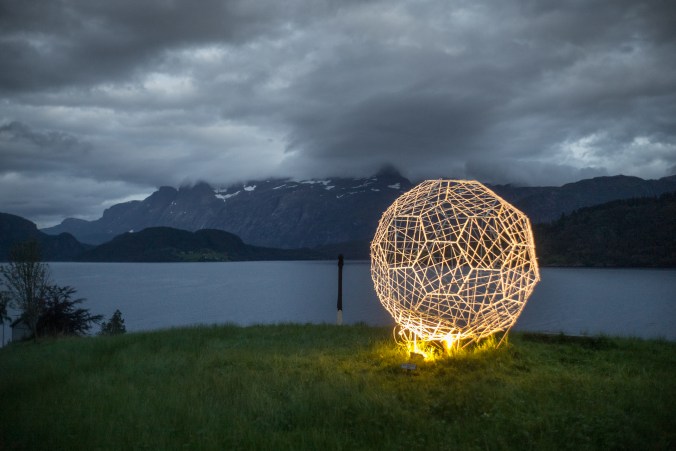
The beautiful “Land of the Vikings”. (Source: The Nordic Council)
- How would it work?
To put it simply, a Nordic “EU” in most form and functionality. If you look at the current setup of the Nordic Council, you have part of the structure already in place. The Nordic Union has its own Council of Ministers (equivalent of the European Council) and general Council (Nordic European Parliament).
In my opinion, only some expansion to the current Nordic Council is needed. You need a Nordic version of the Council of the European Union to formulate a bicameral legislature. The foundation of a Nordic Supreme Court to harmonize the different national courts. Moreover, an executive branch of political and governmental leaders like the European Council and European Commission is required as well.
However, I think a central bank or currency will be the main difference between the EU and my idea of a “beefed up” Nordic Council. A basic currency agreement will create a standard and regulated exchange rate between all 5 national currencies while avoiding a similar controversy like the Euro.
- Conclusion
Is this idea a far-fetched dream crafted in the mold of modern “Scandinavism” that is bound to not happen or fail if attempted?
Maybe.
I gave a loose layout of a Nordic mini-EU, yet with the concerning trends I mentioned bubbling up across the continent and around the world, the idea is not that far from the realm of reality and possibility. Recently a poll showed preference to a “Nordic Union” compared to the EU. Yes, Scandinavians are open to the thought of a new Kalmar Union. And yes, I agree with their sentiments. This would most certainly open up the conversation of the audacity of the north going out on their own.
 Byrd Views