Kalmar Union 2.0: Why this Nordic alliance needs to be expanded post brexit

Denmark, Finland, Iceland, Norway and Sweden

Five nations with a common history and culture in which at one point were in a union called the Kalmar Union. What if this union existed again today? What would it look like?

A union of 27 million people with a GDP of 1.54 trillion dollars.

If the Kalmar Union was a country, the population and GDP would be larger than Australia and be the seventh largest country by land mass in the World. Also, all of these countries in one way or another have implemented the Nordic Model which is one of the most scrutinized, praised and studied set of social and economic policies today.

In a current World where nationalism, populism and growing skepticism of the European Union is present; the idea of new unions similar to EU but smaller in size and tighter in social and political cohesion is very feasible.

The EU is a continental-sized experiment in hope of creating a peaceful Europe and World while building a union comparable to the economic and diplomatic power of the United States. However, that is easier said than done.

Think of Europe as one big confusing, conflicting family with a long history of warring with each other for power and dominance. Meanwhile this same European family with different cultural, political, linguistic and economic histories is trying to get on the same page thus create a “United States of Europe”. Yeah, that was a daunting task from the beginning.

In my opinion, the EU should break up and be an alliance of regional continental states and/or unions. For example, the Nordic Kalmar Union working with a German/Austrian alliance or an Iberian alliance or a Benelux Union. Even in this world, the Swiss can still be neutral.

Skandinavism

A poster from the 19th century promoting unity of Scandinavia. (Source: Wikipedia)

  • Brief History of the Kalmar Union

A union between Norway, Sweden and Denmark did exist at one point during the 1400s when they all were under one monarch and these nations felt the union was needed to thwart a growing power in Germany at the time. Unfortunately differing individual interest among the nations led to a complete division by 1905.

A modern co-operation called the Nordic Council was formed after World War II and created an economic customs union and passport-free travel between the Nordic countries in the 1950s. Fast forward to now, the Nordic Council develops policy on different topics like energy and education for the Scandinavian region.

However, a modern Kalmar Union led by a unilateral consensus of the leaders of all the Nordic nations developing a respectable and/or protective alliance to counterbalance a degradation of the EU is not as straight forward as it seems. However, the current landscape yields to an optimistic perspective of such a task being taken by leaders of the north.

  • Why a Union of Unions might be better than the EU

If anybody is a student of European history, they will know that the continent is a land mass with a plethora of cultures, languages, religions with the seemingly keen interest with fighting each other. Luckily there has been “relative peace” since the Balkan Wars but there is still the tricky reality of the differences between northern, southern, western and eastern Europe.

Skulptur Britt Smelvær

The beautiful “Land of the Vikings”. (Source: The Nordic Council)

  • How would it work?

To put it simply, a Nordic “EU” in most form and functionality. If you look at the current setup of the Nordic Council, you have part of the structure already in place. The Nordic Union has its own Council of Ministers (equivalent of the European Council) and general Council (Nordic European Parliament).

In my opinion, only some expansion to the current Nordic Council is needed. You need a Nordic version of the Council of the European Union to formulate a bicameral legislature. The foundation of a Nordic Supreme Court to harmonize the different national courts. Moreover, an executive branch of political and governmental leaders like the European Council and European Commission is required as well.

However, I think a central bank or currency will be the main difference between the EU and my idea of a “beefed up” Nordic Council. A basic currency agreement will create a standard and regulated exchange rate between all 5 national currencies while avoiding a similar controversy like the Euro.

  • Conclusion

Is this idea a far-fetched dream crafted in the mold of modern “Scandinavism” that is bound to not happen or fail if attempted?

Maybe.

I gave a loose layout of a Nordic mini-EU, yet with the concerning trends I mentioned bubbling up across the continent and around the world, the idea is not that far from the realm of reality and possibility. Recently a poll showed preference to a “Nordic Union” compared to the EU. Yes, Scandinavians are open to the thought of a new Kalmar Union. And yes, I agree with their sentiments. This would most certainly open up the conversation of the audacity of the north going out on their own.

Letter to Sydney & Australia: Why I left

Bittersweet? An opportunity missed?

What if? Was the time spent worth it?

Those are some of the questions that ramble through my mind after reflecting on my time down under.

After a little over 2 years and 2 months of experiencing the Australian life, Sanna and I have decided to try our luck back in Europe.

We of course don’t make this type of move without a lot of consideration. We made the big decision to uproot ourselves and migrate to Australia from England. At this point and time, Sanna and I have established a stable life financially and professionally.

However, if you take a nuanced and honest view at our current lifestyle plus if you truly know me and Sanna then you will see our “stability” built in Sydney as a safe form of professional and personal complacency.

We had been there for over two years, however we never quite got the chance to fully settle down. Professionally and logistically we accomplished what was needed. We found a place to stay and jobs to work. Yet, that was how far we were able to go.

We couldn’t fully foresee a permanent base there for a multitude of reasons.

Sanna and I agree that Sydney (and Australia for that matter) didn’t work out for specific reasons but Sanna and I differ on our feelings about Australia after our time here. I will not speak on her behalf as Sanna is quite eloquent with her thoughts on Australia and Australian culture if requested. So I will just offer you reasons, rationale and feelings behind our departure from my perspective.

Before I begin, let me rewind the clock a little bit. Maybe taking a moment to explain the whole move to Sydney to begin with and this should help clarify why we are leaving Australia.

Shrewsbury is a nice little town but was tough for young professionals. (Photo Source: Wikipedia)

It was early 2016 and Sanna and I were living in Shrewsbury which is a quaint little market town in England.

Honestly, we were doing alright. We had a nice centrally located flat near the train station and in front of the Shrewsbury Castle. We had secure jobs that paid the bills and allowed us to start the repayment of our graduate school debts. We traveled here and there including being able to visit home in either Sweden or Florida. We were technically in a good spot.

However, we were still lacking some amenities of a typical married couple of young professionals who wanted to start a family, but also have opportunities for upward professional mobility.

We were good, but we couldn’t really afford a house. Or start a family. Or really get my career going. Or really make a dent into our collective debt (my graduate school loan is the real financial threat here compared to Sanna’s but as Sanna states: your debt is my debt and my debt is your debt).

So, after some time, we decided to look for a place were we could possibly accomplish those goals. Sanna and I then started the deliberation of where to go to next.

USA?

No. Can’t happen. Sanna’s visa was not completed at the time and I was not (and frankly still not) ready to move back to the US.

welcome-to-florida-1

I do miss home. I miss my friends, family and the amenities of home however I am still don’t want to go back home permanently. (Photo Source: Google Search)

Sweden?

Getting my visa would be very slow in combination with the strong chance that I would have to settle on my current role as an IT professional. In other words, I would continue working as a computer technician until I get the chance to pivot out of that role.

I didn’t want that.

Where then? Where can Sanna and I go that might present the best place to grow our careers and family?

After some thought (and research), we came to the choice of Sydney and decided to give it a try. Sanna could do an internal transfer within her company and I could hopefully find better career prospects.

Now fast forward two years and we are on the move again. But why?

The reasons for leaving are quite simple. You can break down our break up with Australia into these areas: Career, Money & Visas.

Career

I am ambitious. I will put that out there and make sure it’s known. I have dreams and aspirations plus the drive to pursue them. That’s why I do the things I do including, get an education, obtain strong and respectable work experience and overall develop the credentials for better career opportunities.

I am currently looking to either work up or out of my field. I have been attempting this feat for a little while now with no luck. Don’t get me wrong, I am good at what I do however I don’t enjoy it like I use to. I enjoyed my craft years ago when I knew it was useful for building my fledgling CV and it was new to me. Moreover, I was satisfied earlier in my career with the knowledge that this work is a vital stepping stone in my career. But it was a stepping stone nonetheless.

Unfortunately, I have been stagnant on this stepping stone for far too long leaving me honestly frustrated and anxious.

I left England for Australia for the possibility for better opportunities. That was the thinking that I would arrive with the right experience, attitude and work ethic then I should really see my professional trajectory improve.

Well, after biting the bullet and continuing to work in the same role, it seems that I can’t break the ceiling that has been firmly placed over my professional head.

Because of that, I decided to quickly think of another plan.
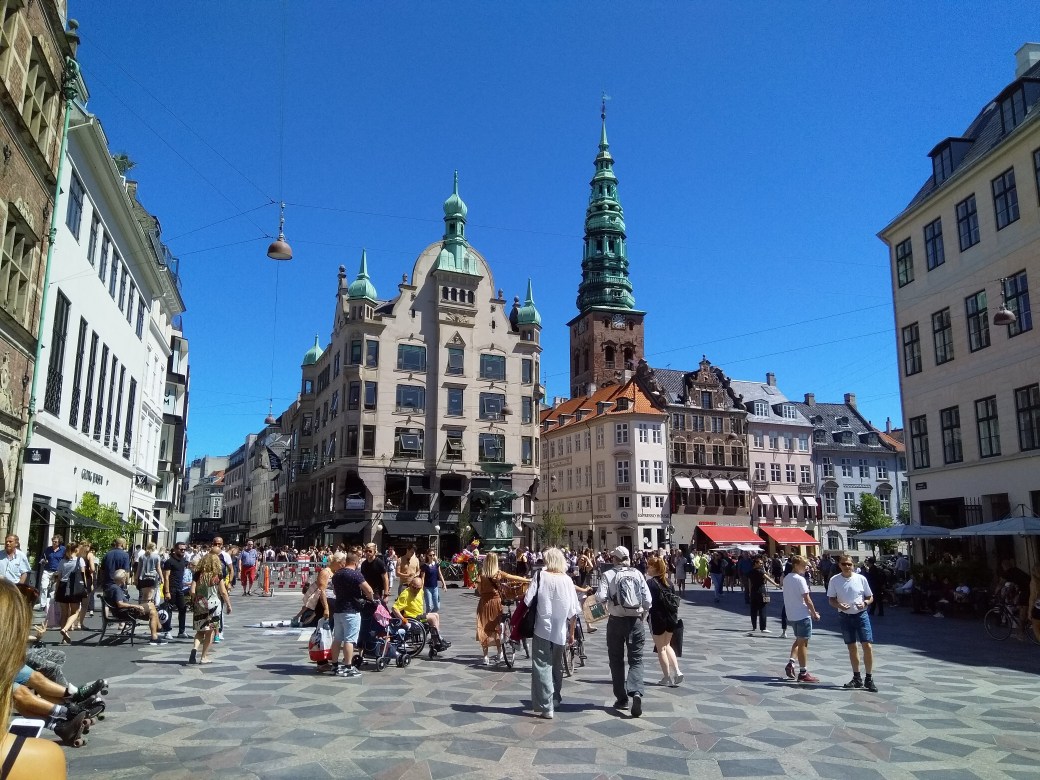
IMG_20180702_133931

Hopefully Copenhagen can yield better career opportunities after two years in Australia.

Money

Can money buy happiness?

No, not directly. However money can buy the things that bring happiness.

Like a place of your own. Right now on average it will take 8 years to buy a house in Sydney with a twenty percent down deposit. It would be even longer for us since for us to stay in the country that long we would need to pay a lot money pay for a long term visa (I will explain that later). Plus, we still have that pesky graduate school loan hanging over us.

Lastly, I fail to mention costs like childcare in the event of Sanna and I having children which would be higher since we don’t have either of our parents (or extended family) to assist us.

Money is the most lucid and obvious reason for staying or leaving. Explicitly, we’d have needed more money if we really wanted to stay in Australia.

Visa

The Temporary Work (Skilled) (Subclass 457) Visa.

Or simply the 457 Visa.  That is the visa Sanna and I obtained for us work in Australia. To be precise, Sanna was the holder of the that visa and myself being the spouse to the visa holder and thus being granted the same rights of 457 visa as well.

Also, this visa is (or at least was) a direct pathway to a permanent residency visa which leads to an eventual Australian citizenship.

Sounds straight forward, right? But there is more to it. Also, this visa doesn’t even exist anymore as it was recently abolished.

But the main issue we had with our visa setup is that it prevented us from considering to have children. Sanna as the primary visa holder was only allowed to have 3 months of maternity leave and that’s it. Australian citizens (and permanent residents) are given little over 4 months in paid maternity leave. Beyond the 3 months maternity leave as the visa holder, Sanna is required to return to work as her visa is dependent on her working a certain number of months in any given year.

That wasn’t going to fly with me and Sanna. Plus, there is only 2 weeks of paternity leave for me as well which is not that great.

This goes back to the whole topic of needing more money.

For us to have children here in Australia, I would have needed be well paid and sponsored but that never came in fruition.

Even if we had children and decided to stay, the next hurdle would be to fork out at least $10,000 AUD in lawyer and visa fees and wait for a long time for a permanent residency.

img_1991

One of the crowning achievements of my time in Australia was being able to host my family.

Overall, the calculus for us to staying and truly settling in Sydney didn’t add up. Because of that, we couldn’t justify staying here let alone staying somewhere so far away from both of our families.

If we were going to stay, I need a better job that paid very well and sponsored me. If that happened, we would have been able to save for a house, have children and justify being so far away from everybody.

However, it was not meant to be. Now we’ve departed Sydney looking for the next locale that might yield better results for us.

That destination we think is Denmark. I will be studying for my second graduate degree at Copenhagen Business School while Sanna continues to work full time. We think pragmatically that this plan is the best move in regards to us advancing our careers, moving closer to our families and eventually start a family.

What are my thoughts about Australia?

I would have been happy to stay in Australia. Even with the distance from both of our families. I envisioned buying a home, starting a family and seeing me and Sanna’s careers take off. But it just didn’t happen that way. Which is unfortunate.

Fortunately, I have had the chance to meet some great people through my work and Sanna’s work. Those relationships that were nurtured here will continue to be with me even if I am back in Europe. Introspectively, I think I have grown more as well and my perspective on life naturally has become more layered and thoughtful. Or least I hope it did.

img_2028

Australia will yield mixed emotions like every other place I have lived abroad.

Do I have ill feelings about Australia?

Not really.

I think Australia is very similar to the US as Australia can negatively react to honest external criticism. Either to the ongoing fraught situation of the aboriginal people or human rights violations occurring offshore near Australia orchestrated by the Australian government.

Sydney can be a great place to live. From my perspective, I would advise that if you want to succeed here as a young couple, then you need the husband to be the visa holder. In addition to that, make sure you have enough salary to quickly save for a house and permanent residency while being able to pay for the high overall cost of living.

If you can do that then give Australia a go and god speed.

The Expat Life: Taxin’ Season

The only things guaranteed in life are death and taxes.

Unfortunately for American expats, taxes is double the trouble on a yearly basis. Luckily, death is still a singular occurrence no matter where you live. I think nobody wants to experience death more than once but I digress.

But yes, American expats experience the pleasure of taxes of back home and the country of residence. The United States is one of two countries (the other being world power Eritrea) that “double tax” it’s companies and citizens. A great example of that good ole “American Exceptionalism”.

However, the recent tax bill passed by congress removed the double taxation on companies but not on citizens and green-card holders who live abroad.

Even Meghan Markle will be in the cross-hairs of the IRS every year she files taxes while living in the United Kingdom as a member of the British Royal Family.

And that is not just filing tax returns on income. Any asset you have including property, bank accounts and private or public pensions have to be reported to the IRS. This is the main area where it gets tricky as you will be wise to account for anything and everything in your name.

And that includes any assets shared between you and a non-American spouse. That is where it is most complex and Megan will have to account for that due to her future marriage to Prince Harry.

My marriage is nowhere near as high profile but I am in the same situation due to my marriage to my Swedish wife Sanna.

Only a few days ago I sent this year’s tax filing in the mail from here in Sydney to the designated location for tax filers abroad which is in Austin Texas. Just in shipping alone I had to spend 41 Australian Dollars (roughly 32 American Dollars) to meet my legal requirement of filing taxes for the year while also proving that I am not making enough money to owe the US Government and also disclosing every single account or asset I have outside of America to ensure Uncle Sam that I am not hiding any money Panama Papers-style.

img_1378

This was the thickness before I included records of my British bank accounts which was roughly another 20 pages.

This year’s tax filing was over 100 pages and weighed almost 1 Kilo (2 lbs) and took hours of time to make sure I did it correctly.

Meanwhile, Sanna doesn’t have to worry about the Swedish taxes and can solely focus on the Aussie tax season since her home country and it’s tax law has a lot more sense than mine.

The question though is why. I have asked my self a few times while I make sure I have a copy of every single payslip from the previous year since the idea of a W-2 is foreign to foreign countries. Since most countries do the calculating for you, all you need to do is make sure the government got the math correct. It’s called return-free filing but I will get to that a little later.

I have learned the expat filing process the hard way through trial and error, and a lot research online. Some people go to accountants, but I stubbornly refuse to due to the principle of not paying someone to file my taxes to prove that I don’t make enough money to pay taxes back home. I can prove that fact by myself. Maybe when I become a millionaire/billionaire (or even a hundred thousandnaire), I will consider paying a third party to either make sure I pay my fair share to the US Treasury or make sure I don’t pay a dime (once again, Panama Papers-style).

Back to the why. Why does the US Government including Congress (creator of the current laws) and the Treasury (enforcer of the laws) have such a desire to waste everybody’s time including their own? Based on the news of the IRS website crashing on tax day, maybe information technology should be a higher priority than a few million expats, many of whom mostly are not making outrageous incomes and/or trying to hide vast amounts of valuable assets.

This is not a good look.

Again, why though?

To not lose out on much needed tax income?

To ensure Americans are not hiding hoards of money off-shore at a Swiss, Cayman or Bahamian bank account?

To keep all Americans on the grid?

Or all of the above?

I really haven’t found a complete answer. I am curious of the past and current reasons for the US being the only “developed” nation to double tax its citizens. America is considered a “developed” or “advanced” nation but examples like our antiquated tax policy reminds us that we are not as developed as we would think.

I do have a solution of my own. How about expats be valued like American corporations and eliminate double taxation? If that is not a motivation, then how about join the rest of the world in regards to common sense income tax law.

If you are concerned about lost tax revenue and you rely on 10 million American expats to fill the gap, then I suggest you actually take a closer look at the current tax code and maybe raise taxes instead of the current slashing of corporate and high income tax. Just an idea.

In regards to the disclosure of any off shore financial holdings, the sheer consumption of time and energy needed for this exercise actually incentives secrecy more than anything else. Instead, the IRS should focus on countries and/or companies (including banks specifically like HSBC) they believe, and have been proven, to have assisted Americans both in the US and abroad who actually practiced different forms of tax evasion and/or fraud.

Now back to the whole process of filing taxes in general. I will safely assume an easy majority of Americans both home and away can agree that the government can and should do the taxes for us.

I only foresee a strange fringe section of people who think letting the government do their taxes is surrendering control to the big bad government. Or they make money off of the third party filing companies like TurboTax. Or they really really like filling out forms.

However, I think most people would rather go with the idea of return-free filing. I think Adam does a great job at blowing a hole in the current status quo and lay out the reasons for considering such a filling system.

Yes, it can be that easy. I live in Sydney and the experience of doing taxes here and doing taxes for home are night and day. It might sound like a hyperbole, but filing taxes for the US while abroad can be months in the making. Especially if you forget to constantly make copies of important documents and you realize later that you need them and thus forced to frantically backtrack and locate your vital missing paperwork.

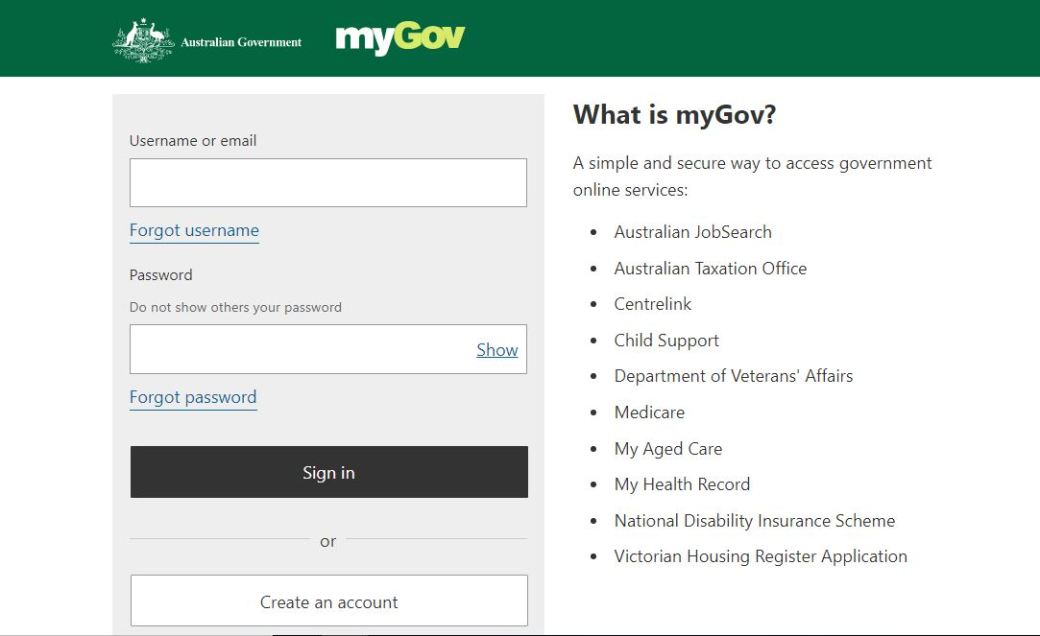
MyGov

Meanwhile, filing my taxes (or lodging your taxes as it’s referred to here in Australia) took me no more than 30 minutes which most of that time was me learning the Australian Tax Office website and process of lodging my taxes via the MyGov website. Also, the whole thing was done online with the option to print stuff off for your own records.

I have written different people of congress about the elimination of double taxing and/or the need to consider improving the process of filing taxes in general but my words of persuasion has gone unheard.

Even if you disagree with me on how we can make the procedure of filing taxes better, I surely believe you agree with the fact that we need to modernize our tax system.

New Amendments for a Better America

The US Constitution.

One of the core fundamentals of American Society and a 200 plus year-old legal binding contract of the government and the people it serves.

Of course that contract was not perfect from the beginning and had to be modified and amended to improve the lives of Americans while also guaranteeing their freedoms.

Amended to define our freedoms (1st Amendment)

Amended to abolish slavery (13th Amendment)

Amended to prevent a dictatorship (22nd Amendment)

Amended to bring slight clarification to a still confused election system (12th Amendment)

Yes, the last amendment was ratified only 26 years ago (after a 200 year wait) but last amendment of any importance was in 1971 with the  26th Amendment banning the denial of voting rights of anybody over the age of 18.

But in a ever more complex and unequal world, the constitution is showing its age and inflexibility.

Amendments to the US constitution are rare and tough to come by. Remember, the constitution is almost 230 years old there has only been 27 amendments or “improvements” to it. That includes an amendment (21st) to repeal a previous amendment (18th).

Us Americans take pride in rarely changing the constitution as we see this as a sign of stability compared to other nations like France who has had 15 different constitutions since the French Revolution.

I can agree that at this point any idea of a brand new American constitution is a hyperbole and will never happen. Moreover, it will place the whole county (and the world for that matter) into peril. In this case, it’s better to go with the “status quo” in a way.

Now comes to the debate between how the constitution should be interpreted and amended. That’s the main debate in constitutional law classes on law school campuses and courthouses across America. On one side, people who think the constitution is a “living document” and should be able to adapt to modern situations through changing interpretations of the original laws. In contrast, there are people who believe in the strict following of the original meaning of the constitution and the only way to change the constitution through the very tedious process of amendments.

Sidenote: There are a lot resources on the matter for deeper research (Originalism vs Living Constitution).

I was not a law student so my stance on the matter is basically founded on my civics class in high school, observations of political and legal activity and the internet.

I am more liberal than conservative. I think the law should be flexible to adapt to an ever changing world. However, I can be a stickler for following established procedure.

Because of that duality, I have a foot in both camps of legal thinking right now and shall not be moved. I want the courts to understand that the thinking of the founding fathers was immense in foresight however even they couldn’t see too deep into the future of the American Republic. Remember, a decent number of the founding fathers were slave owners while another group was willing to tolerate the practice at the time to ensure all 13 Colonies would come together in independence.

Even though the amendment process is daunting, once the amendment is ratified it is very tough to repeal. It only happened once because Americans love their liquor and they realized that after banning it.

I want to place my 2 cents on the need to amend the constitution of these United States of America.

Below are my suggestions for the next 4 or so amendments needed for further progressing our nation into a more complex and globalized world:

28th Amendment – Designation of term limits on persons in Congress

29th Amendment – Further formalization of the rights of the residents of Washington DC

30th Amendment – Modernization of the electoral college

31st Amendment – Formalization of Campaign Finance for federal elections

The thirteenth, fourteenth and fifteenth amendments were called the Reconstruction or War Amendments because they passed during the five years following the Civil War.

Well, I will call these amendments the Progressive Amendments because they will represent the growth, evolution and progression of the US Democratic Republic.

I will write about each of my new amendments in the near future and explain why these additions to the US constitution will promote political diversity but also limit the influence of money in politics.